

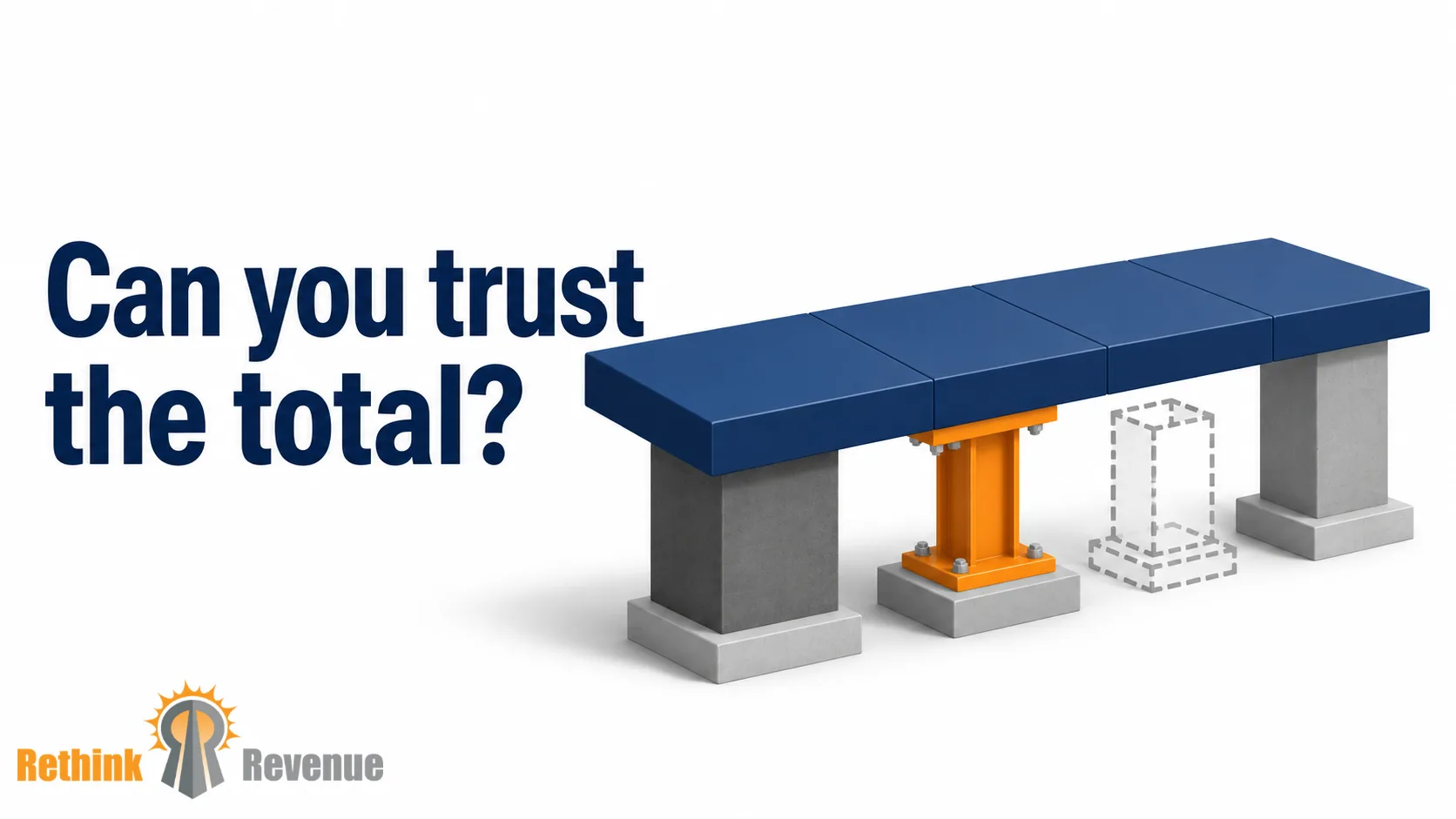
You can trust your CRM pipeline when its opportunities represent legitimate potential purchases, their stages have supporting evidence, and their amounts, timing and next responsibilities remain defensible. Test those conditions in actual records before relying on the total. A large pipeline or a screen full of completed fields does not establish reliability.
The problem becomes obvious when leadership asks a simple question: “What can we count on?”
The dashboard shows plenty of potential revenue. The sales team has explanations for the deals. But after a few questions, dates become guesses, stages become opinions, and nobody is clear about what the buyer has agreed to do next. The number looked useful until someone tried to make a decision from it.
A pipeline should help you allocate attention and assess potential business. To do that, it needs a standard stronger than “the salesperson thinks this might close.”
A trustworthy pipeline lets an authorized person inspect a potential purchase and understand why it belongs, where it stands and what should happen next. The record needs enough reliable context to support those conclusions without requiring the salesperson to reconstruct the entire situation.
Start with the distinction between the relationship and the transaction. A company can fit your audience and deserve continued attention without having a legitimate purchase under evaluation. The opportunity record should represent the specific commercial decision the business is investing sales resources to pursue.
If the pipeline mixes possible future customers, unanswered inquiries and active purchases without distinction, the total becomes difficult to interpret. Different situations have been assigned the same commercial significance.
Zero-Point Selling™ treats a Deal or Opportunity as the transaction within the broader relationship. That gives the pipeline a defined purpose and gives leadership a starting point for deciding what belongs in it.
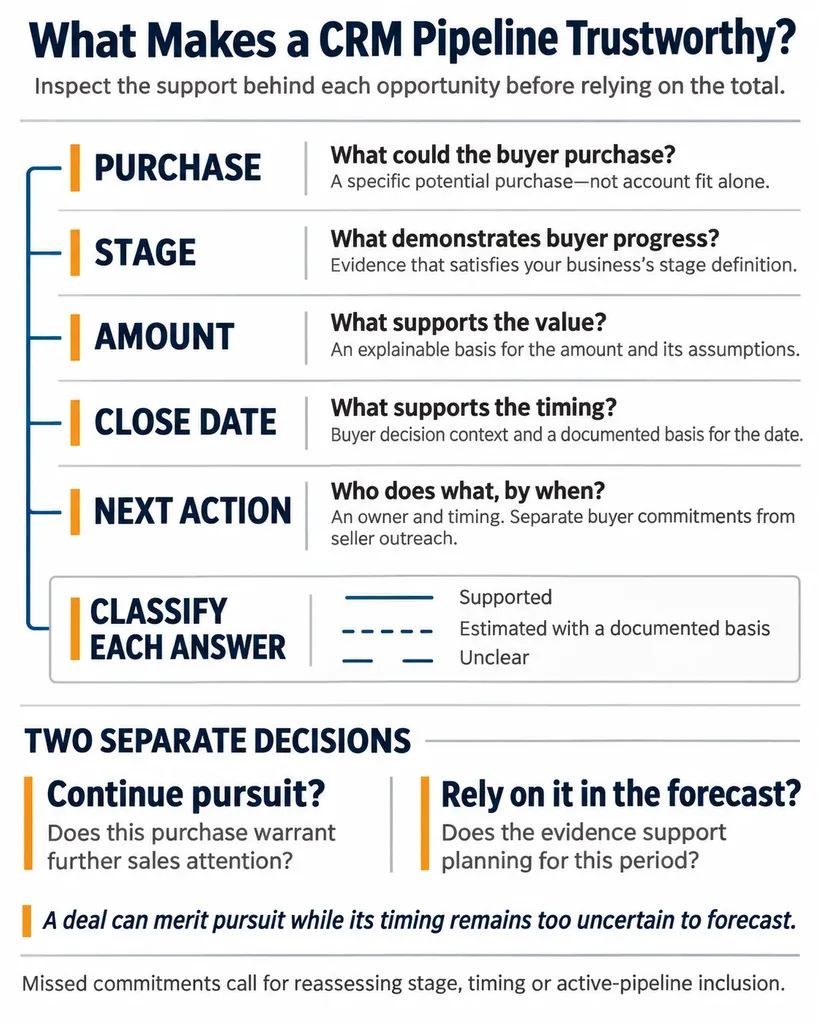
Before reviewing stage accuracy, establish whether the opportunity represents a recognizable potential purchase. What is being considered? What relevant problem or requirement supports the evaluation? What indicates that the buying party is participating?
Those questions do not require every purchasing detail to be known immediately. They require enough evidence to justify treating the situation as active commercial work under your business’s definition.
An account’s attractiveness cannot answer them by itself. Neither can a seller’s desire to win it. A company may be an excellent fit while remaining several decisions away from evaluating a purchase.
When evidence is insufficient, decide where the relationship belongs and what response it deserves. Removing an unsupported deal from active pipeline should preserve useful account information and assign any appropriate follow-up. Otherwise, employees may keep weak deals open because closing them feels like abandoning the relationship.
A stage communicates a condition of the purchase. If its meaning changes from seller to seller, the pipeline combines different judgments under the same label.
Open a record and ask what supports its current stage. Can another person find the relevant buyer response, commitment or confirmed condition? Does that evidence satisfy the business’s agreed definition?
The seller’s completed work provides context, but you still need to understand what it accomplished. Sending information tells you that information was sent. Whether the buyer has accepted a problem definition, agreed to evaluate a solution or committed to a review requires its own support.
For example, a seller may send a proposal on Tuesday. On Thursday, the buyer confirms that the proposal covers the scope they discussed and schedules a review with the budget owner. Those are two different developments. If your stage definition requires a buyer-led proposal review, Thursday’s confirmation is what supports the move.
To test consistency, give two team members the same opportunity record and ask them independently which stage it belongs in and what evidence they used. If they choose different stages, find out whether they interpreted the definition differently or had to fill in gaps in the record. Each problem calls for a different fix.
An opportunity amount should have a basis someone can explain. Early in an evaluation, that might be an estimate based on the scope the buyer described and your standard pricing. Later, it might come from a proposal the buyer is reviewing. The record should make clear which figure you are looking at and what could change it.
Apply the same test to the close date. Ask what has to happen before the purchase can close, who controls those steps and what timing the buyer has confirmed. A buyer’s desired start date can inform the estimate. If the purchase still requires budget approval and a contract review, those steps need to fit into the timeline.
Pay particular attention to opportunities that move into the next month or quarter. A date change can be reasonable. The record should explain what changed and why the new date is plausible. If the explanation is the same each time, leadership should treat the timing as uncertain when making a forecast.
A useful opportunity record tells the next person what should happen, who is responsible and when to check for progress. “Follow up Friday” gives the seller a reminder. “Buyer will confirm by Friday whether finance can attend the scope review. Seller will check in Monday if there’s no reply” also tells the team what progress would look like.
Sometimes the seller owns the next action and the buyer has made no commitment. Record that distinction so a manager can see whether the team is advancing an evaluation or trying to reestablish contact.
When a commitment passes without a response, reassess the record. The missed step may affect the stage, the close date or whether the deal still belongs in active pipeline. Updating the follow-up task alone leaves those decisions unresolved.
Choose a mix of recently opened opportunities, high-value deals, deals expected to close soon and deals whose dates have already slipped. Ask someone who did not create the records to review them. Have them answer five questions using the CRM before speaking with the opportunity owners.
For each answer, mark it as supported, estimated with a documented basis or unclear. That distinction matters. An early-stage deal can have an estimated amount and still belong in the pipeline. A deal that leadership is counting on this quarter needs enough timing evidence to justify that reliance.
Then talk with the opportunity owners. If the evidence exists but only the seller knows where to find it, capture it in the record. If the evidence is missing because the buyer has yet to confirm something, document the uncertainty and decide how the deal should be treated in the forecast. If the same gap appears across several deals, review the team’s definition or process before treating it as a series of individual cleanup tasks.
Bring the results to your next pipeline review. Decide which opportunities deserve sales attention, which need new information from the buyer and which can support a revenue forecast for the period. Those decisions can differ for the same deal. An opportunity can merit continued work even when its timing is too uncertain to plan around.
The next time leadership asks, “What can we count on?” start with the deals behind the total. Show which purchases are active, what supports their value and timing, and which assumptions could still change the forecast. If a single buyer decision could materially change the quarter, name that decision, who owns it and when you expect to know.